Macy Robison 0:00
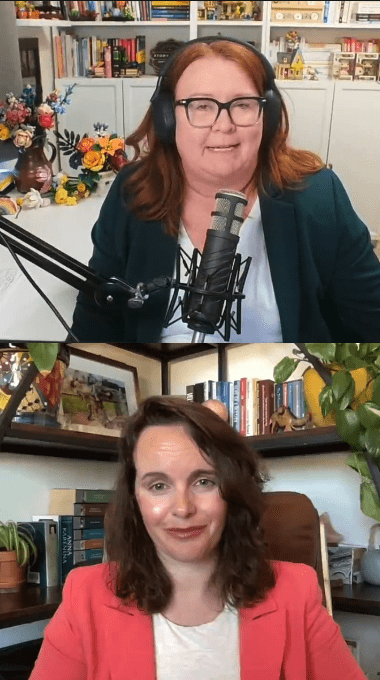
welcome to Own Your Impact, the podcast designed to help you transform your expertise into a platform of purpose and influence. I'm your host, Macy Robison, and I'm here to help you uncover your authentic voice, create actionable frameworks, and build a scalable platform that turns your ideas into meaningful impact. Welcome back. This is part two of my conversation with Cassandra Shea. If you've not listened to part one yet, I would start there. We cover the origin of the archetypes, talk a little bit about the copy-paste trap that all thought leaders find themselves in at some point or another. We talk about the physics of resonance. We tell a story about my mom that is starting to shape the way I help people operationalize the day to day actions they need to take to live out their resonance compass. This half of the conversation gets more into the business. Cassie asks me to give a full state of the union and asks what has surprised me most about the last year, how my offers have changed and what I'm hoping is true a year from now about my thought leadership business. And then she closes it by asking me to introduce myself, and like for all of us, that question is harder than it sounds like it should be to answer. So let's pick up where we left off. Here we go.
Speaker 2 1:19
Let's chat a little bit about the state of the union. Where's your business today? Because I know that if we were having this conversation a year ago, which we do, and we will in a year from now, bring me back on for the anniversary episode. I'd love that.
Macy Robison 1:36
Got
Speaker 2 1:36
it. Should be our birthday tradition. What's true now that would have surprised Macy a year ago.
Macy Robison 1:44
So many things. The first two things that pop to mind do have to do with state of the union, in terms of of how I've structured this and what my offers are. I think the first thing has to do with the framework itself. I started out really just talking about essence and expression. I didn't have the archetype, I didn't have any of the things I do now, but I did know that those two things have a multiplicative relationship with one another, that who I am and how I share. If I can get clear about either of those things, I'm going to be more magnetic. I'm going to be more resonant, and I really just started with that. And I also knew I needed to start talking to people, and part of that was your encouragement. Part of that was just having run a marketing business as a story brand guide for seven or eight years. I know that I need to get in an actual or a virtual room with people and start having a conversation with them, so the fact that the framework has developed in the way that it has, that it is as clear to me as it is that there are measurable aspects to it, that as I've watched people take this, what I now am calling a resonance compass, I was calling it core resonance before, but there are reasons I've kind of shifted the name, which we'll talk about in a second, showing that to clients and having them say, actually, I think there's even more, and anyway, the using that compass to get direction to make decisions about where you're headed, the confidence that that gives, the depth of that create has been really cool to watch, and just try to be a good steward of as more realization and more clarity has come watching people live this out. So I think that's the first big surprise, and then adding the Marsha method on top of that, like that's been really, really cool. I think the second piece has to do with my own commercialization model. When I started, I really, I just did not see any path to doing this work any other way than one on one. It's what I'd always done. I
Speaker 2 3:57
remember that.
Macy Robison 3:58
It's how I'm wired. It's
Speaker 1 4:00
such
Speaker 2 4:00
a transformational guide, I think, wound, but also maybe lie would even be equally true, I think, for anyone. There's probably an outsized number of people in your universe who are transformational guides, just because I've looked at some of the data and nerd it out with you. It's such a lie, and it's such a wound, though, of like, oh, I, I go deep with people, people are my thing, I can't conceptualize it a different way, and just benchmarking that off of what you said earlier, our creation process, like, as I'm evolving my own business method, it's looking at the 3500 hours over the last six years of one to one work and asking what does that body of work make possible because my commercialization doesn't have to be the depth that I just did of basically getting paid to do R and D for six years and 3500 hours plus of deep transformational guiding, I just want to name that because I think there's probably so many people that have that belief in wound and if they could set the. It down like for one second, like why did you believe that was true? I think for me it was because that's how I got paid, but like why did you believe that's the only way that this work could happen was one to one. Why did you believe it was true? And then what shifted, and then we'll go back into the share, because I think this is just so important to your own story.
Macy Robison 5:18
I think I believed it was true because I felt like I had tried to do something different, but when I look at those experiences now, I can see that I didn't approach them as a transformational guide, and I could have in a creation way. One of the stories I've told as a guest on podcasts, and I think I've told it here, is going to work with Amy Porterfield's team in person to create an online course. Created online courses for other people. I had a good idea about, like, take your book and turn it into a business, and I had what I thought was an outline, and I wanted to go learn from the best to put the best product I could out there, and really start to make my mark in this way that I'd helped other people make theirs, and I, you know, went through the online sessions that were live leading up to this in-person experience, listened to the whole day as Amy talked, took a ton of notes, went to actually create in the space that they'd given us to create, and I couldn't do it. I had story brand stuff at my disposal, I was like trying to message it, I was trying like start from the end. I was trying to think about the transformation. I could not get any sort of lesson plan on paper, and as someone who has a master's degree in education, I cannot tell you how frustrating it was. I actually found a video the other day of me sitting on the side of the room in this ballroom, just like filming everybody else working, and me, I didn't film myself, but I know, like, I looked at,
Speaker 2 6:40
you know, what the face would
Macy Robison 6:42
have, what it was, I know what the face was, and I just gave up, and I went and sat with one of Amy's team members, her name's Jill, she's amazing, she's our content supervisor, and has been for, you know, many, many years, and I just sat with Jill back to back and started helping people message, you know, the marketing, and make sure they were clear with their courses, and what I didn't know then that I do know now is I hadn't taught that material to anyone, and even if I'd taught it one on one, if I'd done the activities, but I hadn't taught the curriculum, and so I couldn't write it, and if I had a chance to do that again, I would do that differently, I would do a pilot session, in fact I actually did have one, I feel like successful course that I built right before I went to work for Story Brand full time, where I was helping people not learn about podcasting, but create their own podcast episode. We created the trailer, and we created the first episode as part of this teaching experience, and that actually went pretty well, and I think I was on the right track at that time, which I'm remembering now in real time, so that to me that was part of the belief that I've tried it. I didn't really try it. I did it once, and I didn't examine the experience.
Speaker 2 7:52
Yeah, so many of
Speaker 1 7:54
us have
Macy Robison 7:54
also tried. Yeah, I tried to build a group program too, and you know, I think there are a lot of people out there that are doing a great job teaching, taking your one on one container and turning it into a group container. I had gone through one of those programs, and again was not satisfied with the way that it worked. The difference maker was, and I think you challenged me to do it. I had reached this point where I was like, I, I have no more time left in the day, I feel like this is working, and I don't know how to make this go any quicker. And we came up with the idea to experiment with not just a group program, but a one on one group hybrid, and I called it a lab at the time, because I really did feel like it was a crazy experiment, and even the way we started the lab, and the way it was structured, it did not end the same way. I cut it down from 12 sessions to 10. It now is eight sessions with one on one calls that are interspersed throughout, and that shift in the container and shift in my mindset was like it worked. And not only did it work for the people who opted in, I think it worked better than the one on one group, than the one on one container would have worked,
Speaker 2 9:06
because I'm here to say it did, because I was a part
Macy Robison 9:08
of the lab. You're a part of
Speaker 1 9:09
it,
Speaker 2 9:09
and I wouldn't have gotten the transformation without others in the room who I have now a deep relationship with. One became my client, one was already my client. I'm already their client, and now I'm going to go hire some of the people that I met in that container to take my business to the next level. So that one lab for eight weeks last summer generating like a lot of money between participants, because we got to go into a deep transformation container where you were still the transformational guide, but I believe that I never would have gotten the confidence, clarity, and conviction to move my work out of that container into the world. It was the fastest loop I'd ever undergone for idea to market, and I. Didn't keep going with the business model I came up with at the time, but the question was simply, How could I teach someone else to coach like me? Those are the first question you asked me. What would you do? And I was like, Well, I guess I'd have to like download everything in my brain into a thing, and I sent you like a 37 page document. The next day, I was like, Well, I would start here, and then that became a certification, and then I shut that down, and then that became a group program, and then I shut that down, and now we're building software, which I'm not shutting down, so I couldn't have gotten to here in 11 months if I hadn't had, I think, literally other bodies to bounce those sound waves off of to bring back to that metaphor.
Macy Robison 10:38
Yeah,
Speaker 3 10:38
so kind of the picture of the state of the union,
Speaker 2 10:44
you becoming the transformational guide, and not allowing the stories of perceived failure, or the ways that we start and stop things, or we put them down, perhaps too early, but then there's the other side, where maybe we don't put certain things down early enough, like the belief that you could only coach one to one for this material. What's possible now we just covered that wasn't before, but an even deeper questions. What do you hope we're talking about this time next year when we have our next anniversary episode? Another year older, healthier, happier, more vibrant, more abundance, more in-person connections, which we already have on the calendar. Love that, press love it. What do you want to be true when you sit down next year and record this?
Macy Robison 11:26
I love this question, because the other thing that the group work has made possible, and having the conviction that's becoming more consistent to go out and talk about it has given me people asking for the opportunity to be certified in my methodology, which is not something I ever thought I would have built or created. I've been inside and created a lot of certifications for other people. I've led a multiple seven figure certification for Story Brand, of which I was a part, and I just didn't think that was going to be part of my business model at all. But I think when people ask you for things, you need to pay attention, and I started asking myself the same questions I had asked you, which was, How would I teach someone to coach like me? Does the system hold it, and can I get someone 80% of the way there with the system, so they can bring the 20% of their own uniqueness and magic to this system, which is what I think a good certification gives you the opportunity to do, and could I structure it in a way that they're not just practitioners, but they're living it, so that their business grows as they're helping other people with this model. And I'm hoping that a year from now that certification is alive and thriving. I have practitioners that are, you know, this is something you challenged me on. Practitioners could help me deliver some of this work, that they might even be better at delivering it than I am, and I am excited about that possibility that I have people who are helping deliver this work, and that I have a book, or two, one on the Marsha method, and one on resident thought leadership, and how tuning into our own wisdom and our own wiring actually helps our voice be heard in ways we couldn't have imagined. That is what I hope is happening by next year, because I have even bigger visions beyond that of bringing people together in person to do this work and having a space for that to occur, and so that's the first step to that becoming true.
Speaker 2 13:23
What's so interesting is a year ago you were asking the question. Gosh, I don't know how this could even live outside of the one to one container, right? And now the declared vision, which now that it's declared will line, we don't know how exactly or when, but super, super important to realize that literally in 12 months or less, your vision of yourself, your identity has progressed from I know I have something that solved my own problem, and I've delivered it one to one, I've tested it, I know that that container drives results to opening the doors to your certification, and for that transformation to occur in a year that's been true, I believe, embodiment and mastery of your own principles, while also questioning your own assumption and questioning the assumptions that you came in with about how this might work in the world, but you chose to give yourself room to allow the signal to go out, and oxygen, similar to a fire burning, oxygen is so necessary, the breath is so necessary for our singing to go out. So, where I want to end is really this anchor word that we've referenced many times in this episode. I would love for you to define resonant, like why did you choose that word, why is that an anchor to this work, and the important thing about anchors is we have to know when to pull them up, so we can actually go on the journey as well. Anchors aren't meant to keep us stuck, but they are meant to mark the moment and provide security and stability and awareness. So, why resonance and how does that affect our compass and our journey? I. Have often expressed, and you pointed it out to me that that I reflect this back to people, that when someone says something that we recognize as truth and it feels like our truth too, we use music words to describe that sensation, or if we're seeking help or seeking information, we're trying to get tuned into a different source, or that rings true, or that resonates
Macy Robison 15:30
with me. We always use music words, and as someone who has lived a life that music is such a big part of, I've just naturally noticed that, because I think that, you know, in a musical, when words fail, the characters start to sing, and some people find that corny, and some people find that brings tears, and it just depends on how you're wired, but there's just something about the word resonance. It's one of those things that you hear it, and you know what that feels like, and I think that was the best word to describe that sensation when something does cut through the noise, when it does go through the singer's formant, as it were, and connects with the right person. And my favorite thing, when I taught music, and I know I've told this story before, was to demonstrate what resonance is, because I think it's pretty magical. There's a lot of power, I think, in the things we feel, but can't see, and to some extent sound waves fit that description. They're measurable, we feel them. There's vibrations in our eardrums when we hear people say something or sing something or do something. Every sound starts with a vibration that signal, and it has to interact with some sort of source, and I used to show that to my students by playing a piano key and having a snare drum vibrate across the room. They thought it was a ghost. It was not a ghost that science piano, that's the science, the note on the piano that I was playing, the frequency of that sound wave, and the resonance it created with that other object, the connection is the resonance they were tuned to the same wavelength, which is another thing we say, and shared that frequency, and that snare drum had no choice but to move because of the way it was tuned, and I think that if we can build on things that are true principles that are true, and kind of draft behind them. It gives us a faster path to impact and to sharing things that we know are true. And to me, that was the best word to encompass that. And when I realized that, you know, sound waves, when they just kind of go out, they don't always have a direction to them, but good sound engineers know how to control the acoustics of a room to give them direction, and that's where the compass came from. That idea of a compass to give direction, you may not know the end, but you do know the direction you're headed in. And it was really fun to be together in St. Louis last week, we were near where Lewis and Clark took off on their expedition to explore the western United States, and that idea of them going out and exploring, at least knowing the direction to go, but they took the extra step to come back to make a map to give to others, and I think that's what thought leaders do they understand the direction they walk with their own trust in the compass that they have, you know, created, learned how to use, and they create maps so other people can follow.
Speaker 2 18:33
Very last questions. Want you to reintroduce yourself. Who are you becoming based on embodying the resident resonance, I was just gonna say resident resonance, but you're now the resident of resonance. Who are you now walking into this year of life of opportunity of business? Please reintroduce yourself.
Macy Robison 19:01
Oh, well. my name is Macy Robison. I help thought leaders uncover the unique voice and unique contribution that they make in the world, so that they can own the impact that they have on others and do that clearly with confidence. I do that through the programs that I've created that help you build that confidence, build that resonance, so that the impact you choose to make is the impact you are making in the world, and I, I love it. It's, it's my favorite thing to talk about, favorite thing to do, and the confidence that it's given me, and the confidence that it gives clients has been some of the most exciting work I've ever done, so those of you who've listened over the past year and, and have felt compelled to take the assessment, whether you've worked with me in a more formal capacity or not, have let me. Know that it's been helpful just to have that information in terms of a direction that you're headed, and I would love to invite you to take the test, and I would love to have the opportunity to work with you as I continue to build what I'm building, so that you can build what you are called to build.
Speaker 2 20:14
I love it. Thank you for reintroducing yourself. What I'll end with is a word that really came up for me during this entire exploratory adventure, and that's proximity, and I would not be the person I am today without the proximity to you as a friend, as a mentor, as a colleague, as a client, as my strategic advisor, but the proximity for me to others in resonance has actually changed my business. I'm not always.. I'm your one to one client right now. So, as much as we've said, and I've also done the lab, so I've done two out of three.. no, I've done all three experiences. I upgraded, so I've done all the things. Oh, find me online if you have questions about Macy's work, and I will continue to you. What really stands out to me, though, is when you're in community with other people tuning their resonance, all the voices look different, but the harmonious aspect of being in the room with people who are becoming clearer and clearer on the signal they're sending out into the world has made my signal clear, because of that proximity. I think we all need partners in believing when we're going to step out and create something that doesn't yet exist. We're going to sing a song, create a genre, produce a sound that doesn't yet exist. And one of my favorite quotes is, like, one mistake is a technicality in singing or music, but two mistakes make it jazz. So I just want to say, thank you for for the archetypes, because it gives the nonlinear thinkers in the world, the rebels, the contrarians, the people that didn't fit in other boxes, it gives us language to say I'm going to go out and I'm going to sing and I'm going to do something and I'm going to create something that I know doesn't exist, but my body, my biology, my soul is calling me forward to create, and so what I'm taking away from this conversation is how we create mighty different than what we end up gifting to the world, but both processes are so needed to be anchored in the truth of who we are, and your assessment gives the compass into that depth, and so I'm so excited for the practitioners to bring that to the world, but more importantly, I'm so excited for them to experience it for themselves, because that's where the magic really, really starts. So, thank you for bringing this work into the world with courage and clarity and conviction. I can't wait to re-record the next birthday episode. Thanks for having me.
Macy Robison 22:35
That is a wrap on this two-part conversation led by my dear friend, Coach Client Cassandra Shea, and I want to thank her for flipping the table and holding that mirror up for me. It's a different experience being on this side of the microphone, and I think that's the point. The work asks us to keep excavating, and sometimes you need to see someone who knows the system as well as you do from a different angle to help you see what you're still sitting on. If you want to connect with Sandra, and you do, and follow her work, the best place to find her is on LinkedIn or at her website, The Possibility Investor. And I will put her information in the show notes. And if anything across these two episodes has stirred something in you, whether it's wondering if you're following the copy paste trap, you'd like to know more about the Marsha method, or just permission to put something out before it feels finished. I would love to know. You can find me at Macy robison.com or take the archetype assessment at Macy robison.com forward slash quiz, and I'd love to have you hit reply to the emails that follow that, and let me know what you're thinking. Thank you for being here for any part of this first year. Here's to the next. Thank you for joining me on Own Your Impact. Remember, there are people out there right now who need exactly what you know, exactly how you'll say it, your voice matters, your expertise matters, and most importantly, the transformation you can help others create matters. If today's episode resonated with you, I'd love for you to become part of our growing community of thought leaders who are committed to creating meaningful impact. Subscribe to the podcast, leave a review, and share this episode with someone you know who is ready to amplify their voice. And if you're ready to dive deeper, visit Macy robison.com for additional resources, frameworks, and tools to help you build your thought leadership platform with intention and purpose. And remember, your ideas don't need more luck, your ideas don't need more volume, your ideas need a system, and I'm here every week to help you build it. I'm Macy Robison, and this is Own Your Impact.








+ show Comments
- Hide Comments
add a comment