Macy Robison 0:00
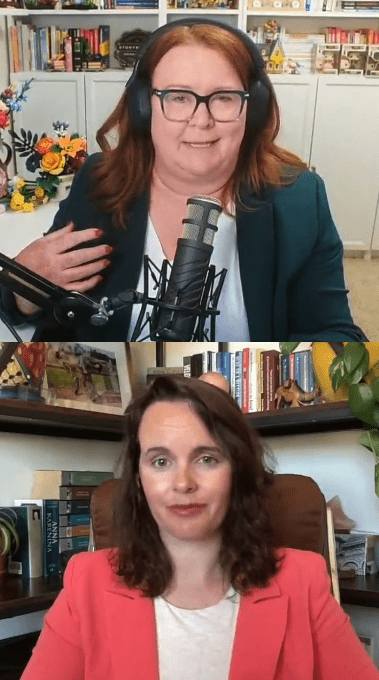
Welcome to Own Your Impact, the podcast designed to help you transform your expertise into a platform of purpose and influence. I'm your host, Macy Robi son, and I'm here to help you uncover your authentic voice, create actionable frameworks, and build a scalable platform that turns your ideas into meaningful impact. Today marks a new kind of episode. This is the first time I have had a guest on Own Your Impact, and I want to talk about why it took a full year for that to happen. This podcast has always been built around my own process of walking through my framework, teaching it, bringing things to you when I'm learning things in real time, and walking through ideas out loud, so that you can use the ones that serve you well, and bringing someone else into that into this podcast felt like a big move, and I wanted to wait until it was the right decision and do it for the right reason. Having a one year anniversary felt like the right decision, and Cassandra Shea felt like the right person to bring on Cassandra is a client, a close friend, and someone who has been in the coaching chair on the other side of me more times than I can count. We cover a lot of ground in this conversation, and so I'm releasing it in two parts, and it's a retrospective of how my work has changed from Sandra's perspective over the last year. In this first episode, you'll hear the origin story of the archetypes. Why copying other people's systems doesn't work the way we hope it will. The physics behind the singer's format, and what that has to do with your thought leadership. And a story I've never shared publicly before about my mom, and about another framework to operationalize the resonance compass that I'm now calling the Marsha method. I'll talk about that more in future episodes. Cass asked me things I would not have thought to ask myself, so let's get into it. This is a first for Own Your Impact. I am here with guest host for the first time. We've been a podcast officially for about a year, and I wanted to mark the moment by inviting my dear friend, client, and also coach and advisor, Cassandra Shea, here to help me walk through. As I've been using this system on myself, things have been developing and changing in real time, and I wanted to just get a state of the framework and have a chance to reflect with Cass here, so I'll hand the mic over to you. I'd love to have you introduce yourself and tell a little bit about the work that you're doing, and then I'm just going to turn myself over to you,
Speaker 1 2:33
Macy. Thank you so much. I'm super excited to be here, and it's auspicious for a couple reasons. Both of us have a birthday coming up, yours is may 1, mine is may 7, which I feel like is another layer of our fun connection. And I started as a client with you last June, so it's been about 11 months. And how I would have introduced myself at the time was, hey, I'm cast, I do executive coaching, I specialize in identity transformation, and I take clients on a really deep journey into becoming who they are meant to be, coming home to themselves and becoming a match for their future goals. And I came into your container with a really specific question, and it's so interesting thinking about what can happen in the span of less than a year. It feels like five years in some ways, in a really good way, because so many things have happened in my life and business as a result of engaging with your work, but the question that I have been working with for 11 months is, what if I put that identity down? What if I put the identity of the coach down? What else is out there for me? And one of the coolest things that I've learned over the last year is if I don't have the form or the function yet to describe what I'm doing, the purpose is I need to go back into my work, because the excavation tool of what I will become in the next iteration is in my own body of work, and that's what I think makes you one of the most unique thought leaders right now working with thought leaders, so if we have this conversation in 90 days, you're like, "Hey, guess who are you? I'll have a different answer, but what you've given me permission to do is show up messy, show up not unclear, but show up without a final polished answer, and ask better and better question, and what that's done for me specifically is it's increased my testing velocity in the past. I didn't want to test things because I wanted to show up polished and clean and clear, and what the resonance system has given me as a compass is to go back into my work and excavate and mine that for the answers, and you've held that mirror up to me all year, so I'm super excited to flip the table, hold that mirror up for you, and explore a little bit about how you've gotten into your own work today and embodied this journey, and what it's made possible for you, and then also some highlight stories of what it's made possible for the people who've gone on this journey. With you,
Macy Robison 5:01
I love that, and I think the thing that's cool about that answer as well is even with that filling in progress, filling in process, you've had a lot of transformation, and we can talk about that more as questions come up, but there's still been revenue generation, there's still been growth in your business as you have done that experimentation, and that's been really cool to have an opportunity to be behind the scenes as part of that, but also witness it in public. Also, one
Speaker 1 5:30
of the things that I've really reflected on, thinking about your podcast being a year out, is how we started with the archetypes, and for me, when I first read the archetype assessment in the baby beginning form, I don't know if I told you this, I kind of started crying because I hadn't seen who I was at that core element, not simply because of the words on the page, but the way the words had a relationship to each other, so my top three archetypes are transformational guide, which I remember kind of being sad about. I didn't think I told you this. I was like, super bummed. I was like, no, like I want to be somebody else, like choose anything else, like.. and I don't know why that's part of our journey, right? Like our makeup, like so many of us grow up and we see these businesses, and we want to have success, like we've seen the blueprint from others, and so when I first got that, I was like, oh no, that must mean that all I can do is be a one to one coach, like I internalized that as, oh, that shoot, the question I have, I don't know if I have the answer to it. Second one for me is category creator, and third was experience facilitator, and one of the most interesting components for me about the way the podcast started was telling the stories of who these archetypes were. So, where I actually want to start is why archetypes, like, why did that come to mind for you? How did you possibly start conceptualizing this? And this is a question I've never asked you, so this is really fun to do live.
Macy Robison 7:03
I love
Speaker 1 7:04
it, but to me, I think about archetypes as like the stories we tell ourselves around the campfire, like it's like something ancient, it's wisdom driven, it's communally sourced, because we're looking at patterns, and I know that's such a gift for you to look at patterns, but Where did you come up with this idea that there's these archetypes moving in the world, and they somehow map to how we do business and show up as thought leaders or business leaders in the world. Like, what? What is the origin point of this?
Macy Robison 7:32
That is a great question. I, you know, the assessment I launched a little less than a year ago, so the podcast came first, and then the assessment came after I was working on it about a year ago at this time, but I didn't launch it right when the podcast launched, I the genesis of it was pattern matching, reverse engineering thought leaders platforms, because I'd been working inside of these businesses long enough and had enough exposure to not only what I thought they were uniquely gifted in, in terms of how they communicated and constructed a business around their ideas, but how that then mapped to monetization, and I just kind of wanted to figure it out. I, I took a really deep dive on a couple of the thought leaders I've worked closely with, because I knew that there were things that worked and didn't. For example, I have a client that I've worked with for about eight years. We had tried to launch an online course for them five years ago, and it didn't sell, and it's always bugged me. And as I started reverse engineering, and, and was thinking about, you know, there's some tie, so in doing the deep dive of this client, realized that, oh, I think the course didn't sell because this client is very wired to just express themselves first. The course was on public speaking, and they're an expert in that, as well as a New York Times best-selling author, and I thought the course would sell well, but as I was reflecting, realized they were reading a script that I wrote that they didn't write, I wrote, and so they were my words and my structure that I borrowed from an Amy Porterfield course, and it just, nothing, nothing lined up, there was dissonance, and it didn't feel clear, and that lack of clarity translated to the marketplace in a way that I did not have an explanation for at the time, but as I was doing the work of reverse engineering, I thought, I bet there's more here. So I started doing that with other thought leaders that I knew a little bit more about their business, and I kind of left the work for a couple of months, and you were actually the one that helped me resurface it. We were in Florida at a mastermind meeting with Dustin Reekman. The three of us were talking, and you said, "What did you ever do with that? And I said, "Oh, I forgot about that. And I came back home and dug it up, and as I was looking at these models, like I had had the speaker, writer, the professor, author, you know, I'd kind of. Hold together an archetypal structure to explain what they were good at, and how that was showing up in the marketplace, and it kind of just flowed from there. And I think to what you said earlier about the definition of archetype, I don't know that I necessarily chose it actively, but I think there's a lot of resonance with the idea that they're about stories, they are patterns that we see, and they help us understand ourselves and others when we talk about archetype as a construct to understand things, and that just felt like the right word as I dug into the work and started to see it's not just the final product that matters, but the creation of the final product, and the creation is a different skill than the final product, and, and that's true with the archetypes as well. So, to your point about I didn't want to be a transformational guide, that doesn't mean anything in terms of what is possible as an end result, as an end thought leader identity, I guess, to kind of call into in your work, but the creation, the way you communicate, the way you guide transformation in others, the way you see the world and express your ideas. All of that starts with these archetypes, and we can use it as scaffolding to start to create the end result could be different from how we're actually wired. We've got to work with how we're wired.
Speaker 1 11:19
There's so many things I want to dive in on. One of the things that I've heard you explain so clearly right now that I think deserves a pin in it, and I have a question: is there's a difference between the creation vehicle and the output where we go to market, and so our process, it sounds like as close as our process can come in congruence with our archetype, that's where we're going to get the clearest signal to then go to market with a monetization strategy, which is one of the things you're so expert at, is just knowing this catalog of information about the way thought leaders can bring ideas to market and monetize, but I think where a lot of us get tripped up, and what I want to hear from you next is this sort of addiction to copy and pasting, and I think that comes because we don't feel safe, or we want security, like we want to know that when we put the effort into bringing this idea to market. Gosh, I hope it makes money, or gosh, I hope it like actually lands with somebody, and part of the pattern interrupt for the archetypes, and I'd love to have you explain a little bit more about why copying and pasting other people's systems or models doesn't work, and I think there's a uniqueness in the thought leader industry because we're watching personality-led brands go to market and succeed, and we're not sure how to work with our own personality, because I think we're trying to jump to the monetization, like we're trying to jump to. Gosh, I need to know that this is actually a business model. It's going to work. It's going to feed my family. I'm going to be okay. And so that almost scarcity rush component pushes us to look at, oh, these are the things that are succeeding the market. This is how that leader show up. I think it's different than other industries in that sense. It's almost harder to navigate, because not because it's noisy, but because it means that we have to work with our personality at a different level. So, what is the pattern interrupt you see both within yourself when you stopped copying and pasting this year? And then maybe even examples from other clients as to how they're taking the system and actually using resonance to create impact in the world,
Macy Robison 13:23
that is such a good question, and I think there is a lot to unpack there. I think the addiction comes from, like you said, lack of certainty. It feels very scary to step out and do something new, and to use a music analogy, like I often do, it's scary to step on stage and sing a solo for the first time, or even the second time, or third time. It just feels very exposed, and you're not sure if it's going to work. And are people going to laugh? Are they going to not respond at all? We care about what other people think, and I think that's one of the wonderful things about us as human beings, but the thing that I feel that has been the proof of copying and pasting doesn't work for everyone is just seeing the proof of my own thought leadership growth of clients when they decide actively not to do that anymore and to trust their own voice, it's not easy. It's actually still a little bit nerve-wracking, but again, I look to a lot of artists and musicians and people who are choosing to put their voice out there because they have no other choice. They want to make an impact, they know they have something to share, and they're willing to bet on themselves. I think the benefit of this framework for me has been I'm able to give clients, and I've been able to give myself the gift of solid footing as they make that choice, as solid as can be expected in something that feels a little fuzzy, a little luck-based. Think everything is a little luck-based in the end of the day, but back to a voice analogy again. Like, when I've practiced, when I've worked on a song, I can basically tell myself I've prepared, I don't need to be afraid, like, and when I'm not afraid, I can still maybe feel a little bit nervous, but I'm willing to send the signal out there because the source is strong, and I might make a mistake, and I might crack, and I might do something when I sing that feels a little bit embarrassing, but if I'm more worried about the signal that I'm sharing and not about myself, there's confidence in that as well. If I'm willing to believe that I can make an impact. I'm willing to stand up and share and do that consistently. The system is going to take care of itself. One of the things I've been talking about a lot recently is it's hard because we rely on feedback to understand if something's working
Speaker 1 15:59
right, but
Macy Robison 15:59
this is a unique space where we don't always get the feedback we hope to get, and we have to keep showing up regardless if we feel like this is the thing we're meant to do. When a sound wave, when a signal goes out, there really, this is a very simplified explanation of this, but there are three things that can happen: it can bounce off a hard object, it can get absorbed by a soft object, or if something is tuned to the same frequency, it will move effortlessly, and when we don't see people moving effortlessly, we mistakenly believe that the signal is wrong, and that's where I think to go back to the original question, we get trapped again and again and again in this copy-paste mode, because we're not seeing immediate results, immediate movement from our signal that is calibrated, going out, and so we banded the task almost right away, instead of being persistent and consistent, and just showing up.
Speaker 1 16:53
I was sitting on one of your strategy calls. I'm excited later to kind of get into a little bit of your offer evolution, like how the containers themselves have evolved as you've evolved as a thought leader in the last year, but I remember sitting on a call, it's probably within the last two months, and it was myself and maybe two or three other people, and there was this shared sentiment going around the room where we're like, I don't know how anyone is going to listen to the song that I'm singing metaphorically, but I'm gonna keep singing it because it's like necessary to come out of my body, and I know at least for me that's been a reclamation of the category creator archetype, which I think, especially as a kid, I wasn't contrary to be like annoying, I just don't see limits. I don't see boxes. I don't see the world, like if other people are looking at what the world in black and white, unlike in spirals colors. And so one of the most healing things for me, in terms of archetypes, is actually looking at no, no, no, like I'm going to send that signal out, I'm going to keep sending a clear signal, because this is work that I believe in. This is work that I know is going to help someone else, and it's okay if it's still iterating, you and I share a similarity, you have much more accomplishments in this field than I do, but we both were trained as professional singers, and you and I have also been each other's coach and client, and coach and client, and we've traded seats, I don't know, countless times, but one of the things that I think was something that I will remember until my dying day, was the day that I asked you, like you were feeling very stuck. This is probably two, two and a half years ago. It was a while ago, before any of this work started coming to light and coming to stage in the way that it is now. I remember, I'm like, gosh, like I was in the seat of coach, and I remember asking, like, what can your vocal training tell you about this, because we started talking about sound waves, I didn't have the music theory knowledge that you did, I didn't go as far as you did collegiately and training wise, but I knew enough to be like, wait a second, let's go back to how sound carries, because as we train as singers, it's about breath work, it's about posture, it's about alignment, there's so many things that if you're not a trained singer, you might not realize go into the production of sound, you think it's like coming from here, you're singing from almost every orifice of your body, you're definitely, if you're only singing from your throat, we know that sound is not going to be very pleasant. Please don't do it, it's going to hurt you. We sing from a place of soul, we sing from a place of igniting all of our cells, and for me, if we get a little more nerdy, my favorite form of singing is opera, because operatic singers are not microphoned, right? They are filling a stadium. I was in Chicago a couple years ago, watching an opera, 4000 seats in the opera house built in the 1930s in Chicago. Gloriously beautiful building. And I am in the back, back, back, back, and I can hear just as well as the person in the front row. Why? What's the science here?
Macy Robison 20:00
So the science is what you encouraged me to dig into, and I had forgotten that it was there, back in the back of my brain. I, as a singer, took voice lessons, and you know, was going through that practice from the time I was young, but I didn't really have a specific pedagogical understanding of my own voice. I knew what it felt like, but I didn't know how to describe that feeling to other people, and I found that particularly frustrating when I started teaching school, and I had a lot of people asking me to teach them voice lessons because they liked the way I sang and they liked the way I taught in a choir setting, but I just said no, I don't, I don't know how to teach this to you. Part of that is because I was also a tennis coach in high school, and in college, that was my job in the summers, and I knew from teaching tennis that I could see what was happening if there was something that needed to be fixed, and I could help you fix it, but I can't crawl down someone's throat and fix their vocal chords, so I just stayed far away from any type of singing lessons, anything like that. That changed when I had a chance to move back to Utah and start teaching school, and my choirs suddenly expanded in number by a factor of four or five. I had gone from 25 kids in a room to almost 100 kids in a room, and I realized I might be their only instructor in terms of their voice, and I deeply believe anyone can learn how to sing, and I just started looking for a teacher that could help me. Ironically, it was a professor who shared the same last name now, we didn't at the time, Clayne Robison, who was teaching group vocal beauty boot camp lessons to the freshman vocal performance majors at a nearby university, and I was kind of shocked. That's not usually done. Opera is not usually taught in groups, but they were getting really great results, and that was enough to get me curious. And from him I learned about this acoustic phenomenon called the singer's format, and he had done a study. Similarly, was a really great singer, did not, in my opinion, when I was at school, understand how to teach that explicitly, but he dug in and figured it out, and he did a really interesting study where he was measuring sound waves from singers to try and pinpoint what people call the singer's formant, which is this acoustic gap in the energy of other musical instruments and the sound waves that they create, where a singer's voice, if properly trained, can create a sound wave that you can measure on a spectrograph that fits in that gap, where there's no energy in the sound that the orchestra is making to compete, and it literally is a perfect place for the voice to fit. And when you encourage me to go back and look at my singing career and my teaching career, and how that could inform what I was trying to teach and uncover with all the things I've done with thought leaders, and that was really where it clicked into place. Our voices are instantly recognizable, they're memory markers, you know, if an old friend calls that you haven't heard from in a while, you recognize their voice. We recognize people singing voices, we just know, and we know people's work when we hear it, even if they're not the ones transmitting it. So that was really the start of it, and having that to anchor things in, that there is a way to fit in the gap without competing in a noisy volume filled way was really intriguing, and that it was a measurable signal was very intriguing, because I've struggled as a client of folks who have tried to help me, asking why am I good at what I do, and why do you like what? Like, how are you? I just couldn't answer any of those branding questions that a lot of really great practitioners of branding ask. It's not that their work is wrong, it just didn't work for me. And I've certified in a lot of different things, I've coached in a lot of other people's containers, in part to try and understand myself better, so I could teach what I felt was locked inside of me, and I couldn't make it quite work. It just didn't quite land. And your encouragement to go back and look at my lived experience to see what was there to teach me was the first thing that really helped me figure it out, but to remember all of that years later and use that as an organizing mechanism to help me articulate what I have had in my brain all of these years, as I've helped thought leaders build their platforms,
Speaker 1 24:30
coming up for me as you're sharing this, and I don't think I've ever told you the story, but I have been a trained singer, I trained from age nine to 16, when I was 19, I ended up getting tonsillitis so bad that I'd sleep apnea, like waking up like couldn't breathe in the middle of the night, so they shipped me off to tonsillectomy surgery, and I asked only one question, because I'm 19, I don't know what questions to ask, that I was like, hey, I'm a professionally trained singer, is this gonna change my voice, like I assume, so we're getting surgery pair. Currently, is like a little bit of a worse than normal case, and they said, "Oh no, honey, you're going to be just fine. It's not going to change a thing. Come out of surgery. The only thing I want to do is sing. 19 years old, super drugged up from the anesthesia, and I just go like my voice doesn't sound like my voice. My speaking voice completely changed, the register dropped. I was a high soprano, but I would have to diagnose myself now as an alto, or even a low alto, because now I can sing jazz. I have a different registry, there's a different tonality, there's a velvet-ness that wasn't there, and I was like, okay, maybe I matured, but really, like, the surgery fundamentally change the sound quality, and I remember going, "Oh no, like I've just erased almost a decade of work. I've been given a completely new voice. I have no idea what to do with this voice. I've lost everything. And the reason why I bring that up is because I think all of us in our thought leadership journey go through this mess, a perceived complete meltdown and failure. We're like, I've been given if it was a gift at the time, now I see it as a gift, but I've been given a gift. Everything's now different, and all the training that just came before is somehow nullified. When you work with people, I know that you've said many, many times that the medicine we give ourselves through the thought leadership business, I think this is a uniqueness to our industry in a lot of ways, is the thing we most need to develop into the products we're building are usually for ourselves, just as a conversation with you 24 hours ago, I'm like, oh, the solution to my current business question is I need to go do a deeper identity work, and then explain it to my team, because they're still seeing me as cast from a year ago, or cast six months ago, or even cast 90 days ago, and I've changed so rapidly from a lot of the work that I've done with you and our tools. I don't yet have a system to go back and show them the delta between they need to make decisions based on my updated identity, the updated identity of the company. So, what have you built specifically? Like, if we even just think about the last year that really served you in that time of transition and change, like, what did you build because you needed the day you woke up with the metaphorical, like, different voice and realized, oh, what got me here won't get me there, and the medicine that you, I believe, have been working out over the last year was probably probably certainly because you needed it. So, what have you built recently that met your own, and how are you currently embodying the work?
Macy Robison 27:40
I think I'm still discovering it, but I can think of two things. One was the leaning into having something that was measurable in my mind, so I use assessments to calibrate source, use working genius, use a couple of other assessments, and we use that to give you a more solid foundation to build from, in terms of let's build a business that is that really does feel like you, instead of just missing. I started with working genius because I was certified in it, and that gave me a lot of data around it's going to help us not build something we want to burn to the ground, because that's really something that happens quite often with thought leaders, if they're not building something intentionally, but having the archetype assessment now on the other side to also like replicate that measurability of a sound wave from a singer to take that and say we can actually measure and give you some solid data on how you communicate, how you guide transformation in others. Those two things felt like the medicine that I needed to take, and I find that when I can anchor in that, when I'm making decisions, especially those two measurable pieces, that is really game changing in terms of when I'm stuck, I can take a look, or like I don't know, maybe a month and a half ago I sat down to write a LinkedIn post, and I typed it, I didn't reflect on a transformation I helped someone walk through, and I didn't verbalize it, because I have Transformational Guide, Resident orator, and then strategic advisor, and they're very close to one another in terms of me taking my own test, and I just typed this thing out, because I was like, proof of life, I've got to get something on LinkedIn. It didn't do that well.
Speaker 1 29:32
Yeah, you gave me permission slip, by the way, two days ago to not do that, which I'm going to print out and put on my desk, like we don't have to just push things out because we have a business as a thought leader, but you said something really important, which was you didn't take a step back to verbalize it and to connect it to the transformation. Like, how did you know that that's what was missing? Like, how did you know it was a missing ingredient? It
Macy Robison 29:58
didn't do very well. Now that can't be my only marker, but I had had posts on either side of this particular post that I felt like I did create in accordance with my own expression wiring that did well in terms of well-meaning people were curious, they were commenting, they were sharing, they were liking, and while we don't want to completely rely on external data to put our work out there. In that specific circumstance, it was good data to say I didn't do it the same, and I can see that something didn't work. And even when I was typing it, it was like, this sounds like Justin Welch, this doesn't sound like me, and I'm not Justin Welch, he's great, he can type all day, so yes, definitely, permission to follow your own wiring there. That's one thing that I feel like has been the mess has become my medicine, and as I continue to take it, I feel a lot more confident about the work I'm putting out into the world and the people I have the opportunity to help. Second one actually came up last week and I haven't talked about this really publicly much at all. I did post on LinkedIn about it, and I started with a verbal processing session to get it there, but you and I were together at a mastermind last week again, and
Speaker 2 31:13
things
Speaker 1 31:13
happen when good people get together in person. Proximity is a, it's a good thing,
Speaker 2 31:18
it is.
Macy Robison 31:18
It's way more fun to go to a concert than listen to a CD by yourself at home, even though the
Speaker 1 31:24
second best are albums recorded from
Speaker 2 31:28
live
Macy Robison 31:29
events,
Speaker 1 31:29
specifically to the 70s, because I can't go there, so that time capsule is so rich, because you feel it, you know that it was a live transmission. Okay, continue. Exactly,
Macy Robison 31:38
so this live transmission came from being in the room doing work on our self leadership, our team leadership, our thought leadership. According to Dustin, who went through the accelerator with you, the thought leadership he's developing, and I was examining where things are. I feel like these are going well in my own business, but was looking at this team leadership component and had an opportunity to reflect on how my family is involved in the business now. How I want to involve them going forward. Thought about my extended family, and that brought me back to my mom. You know, I've already mentioned my mom in terms of a lot of the things that I am grateful for as a singer, as a performer, she saw some patterns in me and pushed me to develop in ways that I don't know I would have done on my own, and I was reflecting on her in terms of business and her trajectory of going from stay-at-home mom to school teacher and back and forth a little bit, and then when I moved out early in college, she started selling pre-need funeral insurance from my dad's funeral home. I grew up in a funeral home. It's my two truths and a lie. It's a fun one, but I remember I wasn't living at home at the time, but you know, would hear she's selling really well. She's getting to go on these trips. She was really excited by that affirmation. I knew that she had a practice as a salesperson where she would call five people a week, a day. She had a stack that she would like, had the discipline. She didn't love doing it, but she would go into her office and she would call five people. And I've shared that story with a lot of clients. There's something about, yes, it's great to set goals, but you need to control the things you can control, and I shared that story many times as an example of, well, this is what my mom did. I have not always done that, and so I was reflecting on, you know, I'm at this inflection point where I learned this lesson from my mom. I've not had disciplined consistency when it comes to sharing my own voice, something I preach, but don't practice, so I need to embody that better. And as I was reflecting and journaling and thinking about that, I thought of another story of my mom, and she passed away when I was 26 She was only 49 years old, and I'm a couple years older now than she was when she passed away, and that's been an interesting journey to walk through. That's probably better for a therapy podcast, but as I was thinking about her and her voice, and how she taught me, and still teaches me, remembered a story that was on a video that our neighbors very kindly made for us, because she died very suddenly. It had a huge impact on our community, both our faith community and our neighborhood, and one of the videos was from a neighbor, a longtime neighbor, and she was just sweetest woman, and she told this story about her parents, and that my mother had come over to visit them one day, this is her telling the story that our mom, Marsha, had come over to visit one day and was visiting with her elderly parents, and suddenly just stood up and started doing the dishes, and this woman said, my dad talked about that for five years, that Marsha came over and did the dishes, and I last week thought of that story and realized almost since. Containously, because I'd been thinking of my mom in this business context. I remember when she sold pre need insurance to that couple, and I realized she was on a sales call, and there was this pattern of radical service, like doing the thing that is so unexpected that helps people feel seen, that allowed her to build trust with these sweet little couples and widows and widowers that were trying to take care of themselves and take care of their family by buying this insurance, and then she also had the discipline to make the phone calls to people she didn't know yet. I actually learned from talking to my sister that she not only had the postcards once a week, she would grab the white pages and she would cold call 25 people from the white pages and mark it in the phone book, and it was just a really deep lesson around I have that in me too, and I have an opportunity to embody that as an extension of when you know who you are and you make decisions about how you want to show up with your thought leadership with your business, then you have the opportunity to show up consistently to be the person that you know from a performing standpoint. I'm going to get on as many stages as I can. I can control that. Going to try and give the gift of the song that I have to sing to as many people as possible. They may not love it, they may hate it, but that's not my business. It's my business to employ what I now call the Marsh Method, which is radical service combined with disciplined consistency, and, and working this week, this is new, but working this week to try and embody that and share it when appropriate with clients has been really, really healing. We had a couple people in the mastermind that have taken that on as a, as a way to put their work out in the world as well, and have been texting me and checking in on me, and I've had a couple clients I've shared that with, and, and I would say that's the newest iteration of leaning into how I'm wired, not just how I express myself, which is what the archetype measures, but when I work with clients, we go through this full resonance compass, which is, you know the signal, how you're meant to express yourself, how you embody that, and that's the piece you were talking about earlier, of that's always a kind of spiraling learning of man, I have a new way to show up, and that's kind of what I'm experiencing right now, and then the signal of yes, I know what my working genius is, and I'm going to make sure I design for that, but there is lived story and lived experience that some of it's business related, but some of it's personal. It's not all meant to be shared publicly, but the more we can excavate and lean into our lived experience, our hero's journey, and use that as teaching material when we show up as a guide, as a thought leader, as someone who is trying to help others and have an impact with the things that we know, it's really just this beautiful self-generating loop that creates confidence, that helps us make decisions, that then brings more confidence, and it really deepens and further magnetizes, and I guess clarifies the resident signal that we have the ability to send out.
Speaker 1 38:07
I am super, super grateful to have seen the video that you mentioned that your neighbor made when we were in person last week, and I'm so excited to have Marcia as a mentor for all of
Speaker 2 38:22
us.
Macy Robison 38:22
That is where we're going to pause today. Part two is coming next, and it shifts into a different gear. Cassandra puts on her strategic advisor hat and asks me for a real state of the union of my business, where it is today, what would have surprised me a year ago, and what do I hope is true when we sit down and record again in another year, if you have your own version of a framework that's accurate, but maybe still incomplete, a place to start understanding how you're wired to express it is the archetype assessment. You can take that for free at Macy robison.com forward slash quiz. I'll see you next time in part two. Thank you for joining me on Own Your Impact. Remember, there are people out there right now who need exactly what you know, exactly how you'll say it. Your voice matters, your expertise matters, and most importantly, the transformation you can help others create matters. If today's episode resonated with you. I'd love for you to become part of our growing community of thought leaders who are committed to creating meaningful impact. Subscribe to the podcast, leave a review, and share this episode with someone you know who is ready to amplify their voice. And if you're ready to dive deeper, visit Macy robison.com for additional resources, frameworks, and tools to help you build your thought leadership platform with intention and purpose. And remember, your ideas don't need more luck, your ideas don't need more volume, your ideas need a system. And I'm here every week to help you build it. I'm Macy Robison, and this is Own Your Impact,
Unknown Speaker 39:58
you.








+ show Comments
- Hide Comments
add a comment